PROTEIN – MYTHBUSTING AND MISCONCEPTIONS
This is a section from the EBook, Nutrition 101, created by Rebecca Toutant and PLT4M. In this section Rebecca and Doug talk through 4 major myths and misconceptions around protein. Check out the video and article!MYTH: JUST EATING PROTEIN WILL GET YOU ‘BIGGER’
Protein by itself does not increase body strength or physical size. The only way to gain muscle is to do exercise, or to do physical activity like strength training.
Eating protein with a little bit of carbohydrates after your workout supports muscle growth and strength development. But the benefit tends to max out around 20 grams post-exercise.
But gains are NOT in direct proportion to protein intake. This means that consuming protein does not make you bigger.
The size of the muscle has much more to do with training styles, rest and recovery, genetics, and muscle building hormones such as testosterone.
MYTH: PROTEIN IS SUPERIOR TO ALL OTHER MACRONUTRIENTS
Protein is not superior or inferior to other macronutrients. It’s just different.
It provides a different set of benefits. Protein-rich foods tend to have different nutrients attached to them versus carbohydrates and fat-rich foods.
Yes, protein can provide energy, just like carbohydrates and fat do. However, the quality of the energy it gives is different, and the functions that it serves for the body are different.
Protein will keep you fuller longer than carbohydrates, but duration of fullness is not necessarily a health benefit – it’s just a difference in how quickly it’s digested.
Keep in mind though, that taking longer to digest means it’s not a readily available source of energy like carbohydrate.
So if you eat a protein-rich food before you try and exercise you’re going to feel way more sluggish than if you had something rich in carbohydrate.
MYTH: THERE’S NO SUCH THING AS TOO MUCH PROTEIN.
Our body really doesn’t need super high doses of protein. And having high doses of protein doesn’t lead to more benefits.
In general, the body can utilize up to roughly 20 grams of protein for repair after hard exercise, and that can easily be achieved with food such as a turkey sandwich or Greek yogurt.
Ideally, the protein is paired with carbohydrates because that helps the amino acids access the muscle. While consuming high doses of protein may not “harm” you, prioritizing protein-rich foods over carbs and fats runs the risk of pushing out beneficial nutrients such as fiber and antioxidants from grains, fruits, and vegetables.
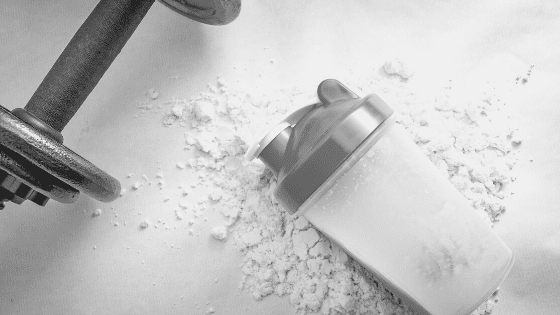
MYTH: PROTEIN POWDERS ARE REQUIRED WHEN TRAINING
Protein powders are not the same as eating protein-rich foods. Yes, they contain a whole bunch of amino acids, but so do animal sources of protein as well as properly paired plant protein. They are not superior to real food – they are just a convenient supplement (not alternative).
Protein powders are typically only protein, either from plants (soy, hemp) or animals (whey, egg, casein). But because they’re only protein, they do not contain the nutrition “package” of important nutrients like protein-rich foods (see the section on nutrients in protein-rich foods).
The benefit of a protein powder is that it’s convenient. It’s easy to take different places. You don’t have to worry about it spoiling, or going bad in your locker or backpack. Protein powders are also low volume foods. So if you’re a person who struggles with appetite, it’s an easy way to get fuel for recovery without having to force-feed yourself.



 ;
;