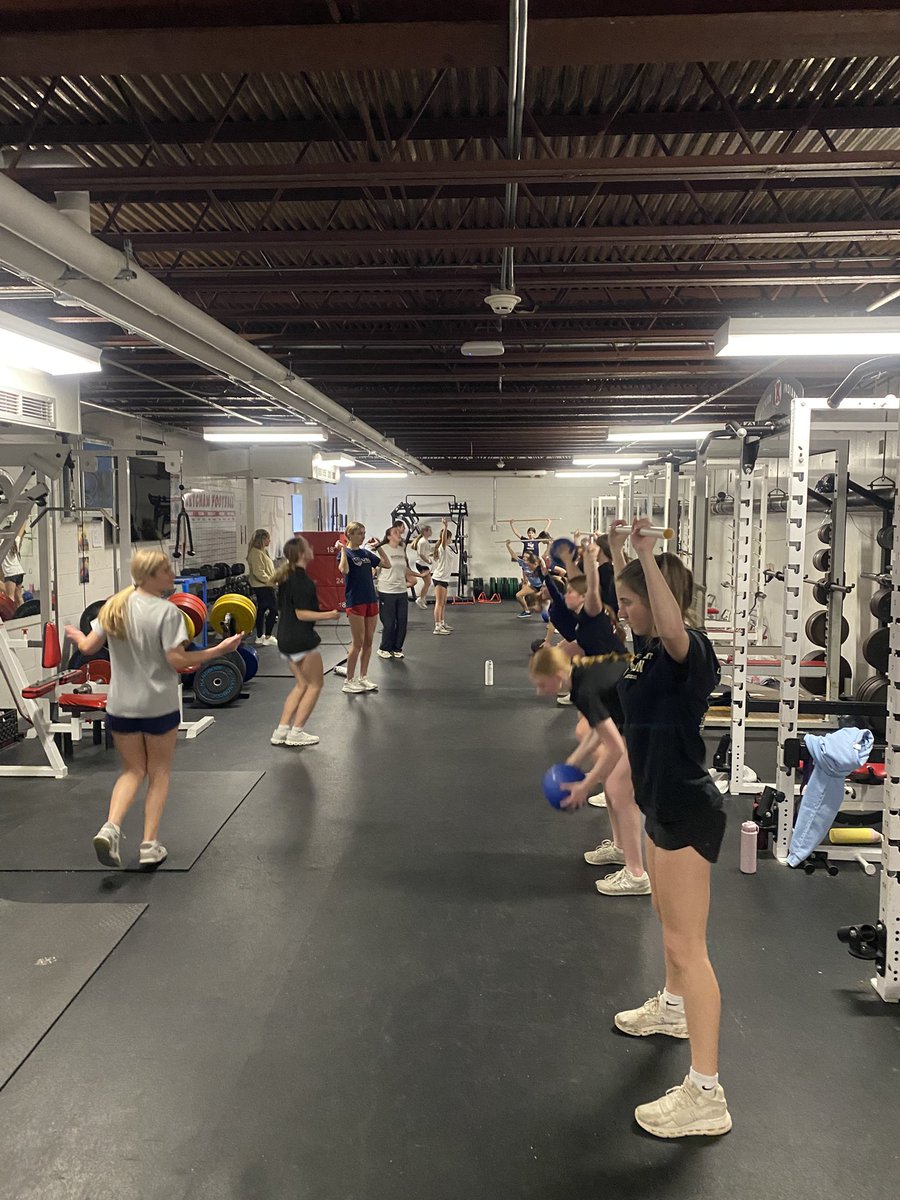
Walk into a Personal Fitness class at Morton High School in Illinois and the environment feels special. The weight room is active, with students spread throughout the space and each group working with purpose.
More girls than ever are lifting. Students are choosing programs that fit their goals, and many are confidently using equipment they once found intimidating.
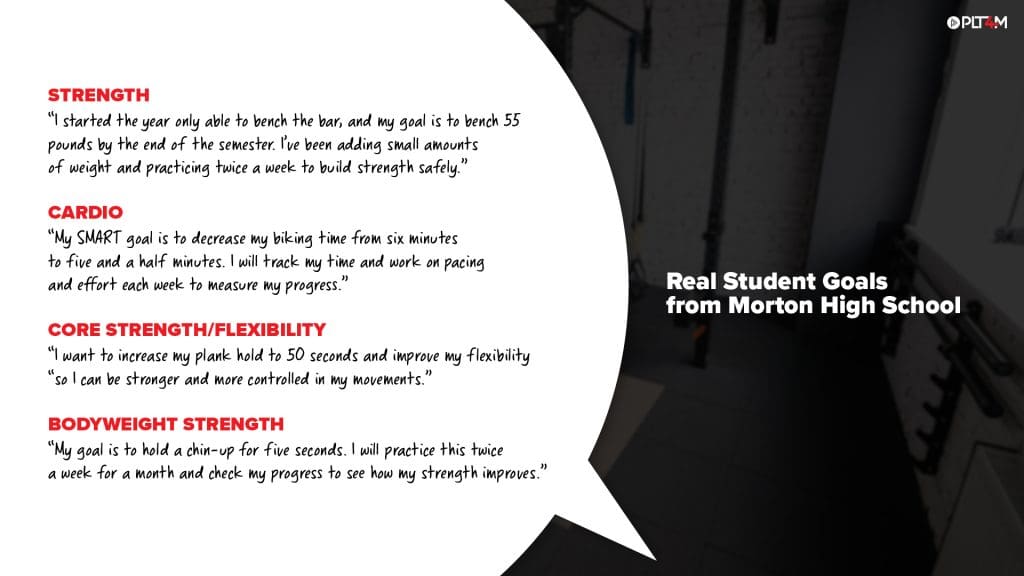
Students in Personal Fitness don’t just follow workouts—they create them. As part of the course, students design multi-week training plans built around SMART goals. They select metrics to track progress and reflect on how their bodies respond over time. For some, that means building strength. For others, it means improving mobility, aerobic capacity, or overall confidence.
What stands out most is ownership. Students choose where they work in the room, the equipment they use, and how they progress.
One student who had never considered herself “strong” started with a lightweight barbell. With consistency and encouragement, she moved up steadily. Another student with sensory sensitivities avoided loud cardio machines but found success through yoga and guided movement—activities he had never tried before.
Personal Fitness has become a space where students feel safe experimenting, learning, and building confidence. It’s no longer just about workouts. It’s about helping students find what works for them.
Morton’s Mission for Personal Fitness
When Alisha Morrow joined Morton High School two years ago, she was excited by what was already in place. Morton offered multiple PE pathways, including general PE, athletic weights, and personal fitness. That variety stood out to her right away.
“I came here because of the focus on personal fitness,” Alisha explains. “I love fitness-based curriculum, and I loved the idea of being in the weight room and fitness center every day.”
With 15 years of teaching experience—and a background managing gyms and working as a trainer—Alisha brought a clear perspective. Fitness spaces should feel accessible, safe, and supportive of students at every level.
She quickly saw opportunities to enhance the personal fitness experience. While the class option existed before she arrived, many students still viewed the weight room as intimidating. Some had never been in a gym and others didn’t know how to use equipment safely. A number of students—especially girls—felt uncomfortable stepping into what felt like athletic weight spaces.
Personal Fitness became the place to change that narrative. The focus shifted toward fundamentals: how to use equipment, how to move well, how to train safely, and how to build confidence over time.
With a wide range of student experience levels, structure and flexibility mattered. Enhancing what was already there meant giving students clearer pathways, stronger support, and more opportunities to take ownership of their fitness.
From Vision to Structure: Building the Semester With Purpose
From the start, Alisha had a clear vision for what Personal Fitness could look like over the course of a semester. Students wouldn’t be thrown into full independence right away. Instead, the class would begin with structure—learning movements and concepts, understanding the space, and building comfort—before gradually opening the door to choice and exploration.
Early on, that vision lived in spreadsheets and shared documents. Alisha tracked workouts, progressions, and notes manually, but it quickly became difficult to manage. “I was living in Google Sheets and Docs,” she explains. “And if one formula was off, the whole thing was off.”
More importantly, the system pulled her away from teaching. “It became less about me teaching kids and more about me managing documents,” she says.
PLT4M offered a solution. The platform gave Alisha access to structured programs, clear movement progressions, and instructional videos that aligned with what she was already teaching. “It had everything I was trying to build on my own,” she explains. “And it made it way easier to show students with high quality videos and resources how to do things the right way.”
Using PLT4M, Alisha could introduce foundational movements, safety expectations, and equipment use with confidence. Students had consistent examples to follow, and she had more freedom to circulate, observe, and coach. Once those basics were in place, students were ready for the next phase—taking ownership of their own training.
Sample Instructional Video: Barbell Back Squat
Videos like these help to teach form, safety, and more for students in physical education.
SMART Goals and Student-Created Workouts
After building a foundation, Alisha transitioned students into one of the most important parts of the course: creating their own workouts.
As the culminating class project, each student develops a 12-week training plan built around a SMART goal. Strength, mobility, endurance, or confidence are all welcome starting points. Using the PLT4M Student Workout Builder, students design multi-week programs and select metrics that connect directly to their goals.
“The biggest thing is that everything lives in one place,” Alisha explains. “I can see their goals, their workouts, and their data without chasing papers or spreadsheets.”
This process isn’t hands-off. Alisha meets with students individually and in small groups as they build their plans. She asks questions, challenges assumptions, and helps students refine their ideas. As the semester progresses, students are encouraged to adapt—adjusting workouts, changing metrics, or rethinking goals based on how their bodies respond.
For students with different starting points, this flexibility matters. One student who had never lifted before built a program focused on learning basic barbell movements with lighter loads and growing confidence. Another student recovering from an injury shifted focus toward mobility and low-impact strength while still tracking meaningful progress.
The result is a course where structure and choice coexist—and where students learn not just how to work out, but how to think critically about fitness.
Confidence, Connection, and Student Response
As the Personal Fitness course has taken shape, Alisha has seen a clear shift in how students engage with the weight room. What once felt intimidating now feels approachable. Students move with more purpose, ask thoughtful questions, and take greater ownership of their training.
Choice plays a big role, but structure matters just as much. Students know what they’re working toward, how to track progress, and how to adjust when something isn’t working. PLT4M supports that process by giving students daily feedback through their workouts and data, helping them see progress over time—not just feel it.
“That feedback is huge,” Alisha explains. “Students can actually see the work they’re putting in and how it’s paying off.”
One of the most noticeable changes has been increased participation from girls. More girls are lifting consistently and exploring strength training with confidence. Some arrive as athletes. Others are new to the weight room entirely. Clear guidance and visible progress have helped remove much of the intimidation factor.
Just as important, Alisha spends less time managing logistics because of PLT4M and more time coaching. The weight room has become a place where students feel supported, challenged, and connected—both to the work and to the person guiding them.
Free Download!
THE LIFETIME FITNESS PLAYBOOK FOR PE
Proven strategies to introduce more Lifetime Fitness into youre Curriculum. Loaded with free lessons, you won’t want to miss this resource!
Continuing to Build At Morton
Even with the progress made so far, Alisha is clear that the work is just beginning. She views Personal Fitness as an evolving course—one that should change as students change and improve with each semester.
“I don’t like to teach the same thing the same way every semester,” she explains. “There’s always something I want to adjust, refine, or try differently.”
With PLT4M at her fingertips, Alisha can continue adapting the course—modifying workouts, refining assessments, and creating new ways for students to engage with their goals and data. The upcoming expansion of Morton’s weight room will only add to that momentum, creating even more access and opportunity for students.
At its core, Personal Fitness at Morton High School isn’t about a single program or tool. It’s about building confidence, trust, and capability in a space that once felt intimidating. With a strong foundation in place and a commitment to growth, Alisha and her students are just getting started.

 ;
;