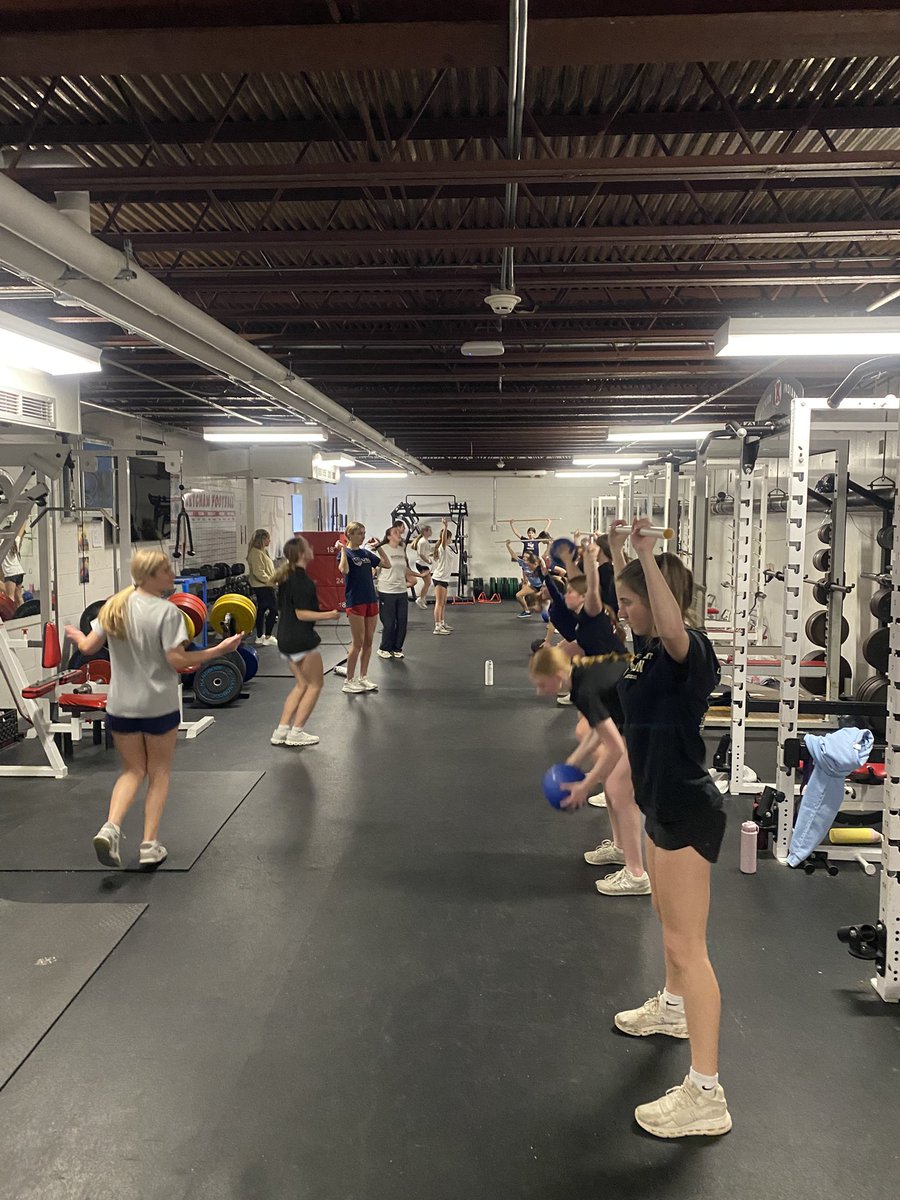
One of the 3 most common loaded variations of our standard air squat – the Front Squat is widely regarded as the most “athletic” of the weighted squat movements.
While we believe that any and all squatting has great benefit to performance, the Front Squat is indeed a great lift which comes with a host of benefits beyond basic below parallel strength. Due to the “front rack” positioning of the barbell, a vertical torso is not just helpful but required. This means that hip and ankle mobility become an even greater part of the equation. As does midline stabilization (aka core strength). Lastly, the front rack position itself is one requiring some coordination and upper extremity mobility.
When attempting the Front Squat for the first time, there are a few main coaching points to keep in mind when teaching the front squat:
1. Hand placement – the front rack is a difficult position for many athletes to get into. Instruct them to take a wider than shoulder width and loose finger grip. The bar should rest on the meat of the shoulder, not the collarbone. We address front rack mobility development in other videos.
2. Elbow Height – this is the most common issue for new athletes. We want to keep the upper arm as close to parallel to the floor as possible. Use visual, auditory or tactile cues to get them to keep the chest proud and elbows high (the “2 Potato Rule”). One great cue is to tell your athletes to lead from the elbows on the way out of the bottom of their squat, cueing them to drive the elbows up.
3. As always, we recommend that athletes master the basic squat first before attempting any loaded variations. Even more important, though, is to maintain our 4 points of squat performance during every loaded rep. We never add weight to an improper movement!
The key to development is to master the basics…then master them again!



 ;
;