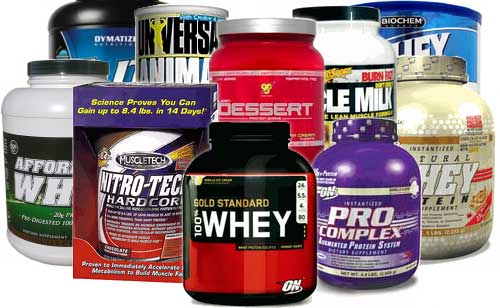
Protein is one of the most classically misunderstood aspects of sport nutrition by high school athletes. Many of you have assumed the need for drastic protein supplementation during the off-season. That fact is, however, that you as an athlete have a protein “RDA” (Recommended Dietary Allowance). That is, you require a specific amount of protein per day. For those of you aiming to simply maintain your current size and muscle mass, .5-.6 grams of protein per pound of bodyweight will suffice. For those of you actively trying to increase muscle mass, this needs increase to about .7 grams of protein per pound of bodyweight.
To add some perspective, a 180 pound high school Junior working hard to get bigger for his senior year will require 126 grams of protein per day. This may sound like a lot, but keep in mind that a simple can of tuna contains more than 30 grams of protein. By just making sure that each meal you consume throughout the day has a good source of protein, you will likely hit your required nutrient levels with a balanced diet. Thus, protein supplements, for anything other than quick and easy post-workout shakes (which we have discussed previously), are usually money unnecessarily spent. Rather, weight and muscle gain is a product of increasing a balanced diet, which increases caloric intake overall while still supplying ample protein stores.
*Note: While protein supplements may not be necessary, they are certainly an easy way to help you reach your daily protein requirements if you are having trouble. I know you are all very busy, and that school meals rarely meet your nutritional needs (especially in the protein department), and if you desire a protein shake or bar to help settle the score, it is certainly OK.*
Mom! Where’s the protein?!?
Share this article:
Recent Posts
Interested if PLT4M can work at your school?
Follow Us!
With only 25 minutes per K-5 class period, how do you make every minute count?
See how Josh Gross builds a tight class window into a full, meaningful experience for every student.
Every Minute Counts: Maximizing a Time-Crunched Elementary PE Schedule
See how Josh Gross builds engaging, standards-aligned elementary PE at Pepper Ridge, making every minute count in a 25-minute class window.
hubs.li
Check out the article, “Every Minute Counts” from @PLT4M!
In it, I share how I’ve used their elementary curriculum in my PE program to make the most of the time I have with my students. 👊
Thanks to @PLT4M for the opportunity to share!
#PhysEd
Putting together all the parts to teach skills in K-5 PE is hard! 🙌
Between demos, visuals, and cues, teaching one movement well takes a lot of prep — and young students learn best when they can actually see it.
Our free Visual Learning Playbook gives you all the parts in one
How does a school move students from just following along in PE to actually owning it?
At Farmington High School in Connecticut, students aren't just following instructions anymore — they're setting their own goals and tracking their own progress.
From Passive Participation to Student Autonomy
Farmington High School shifted PE from passive participation to student autonomy, giving every student real ownership of their fitness.
hubs.li
Every other subject gets a textbook. But what about PE? 🤔
Don't start from a blank slate every year. Tap into PLT4M:
📚 Dozens of units
📝 Hundreds of lesson plans
🎥 Thousands of videos
All built into one easy-to-use system — so you can finally ditch the blank doc.
See what
A classic game kids already love — now it teaches fitness skills too. 🎣
Meet Go Fish Fitness. Quick look here 👇 full breakdown in the link.
📖 https://hubs.ly/Q04rdL2n0
#PhysicalEducation #ElementaryPE #PhysEd #PE