
Fitness games for elementary PE put a fun twist on teaching and developing basic fitness skills. By combining movement with engaging games, physical education teachers can help students stay active while enjoying the experience.
During physical education class young students benefit from playful activities that build movement skills and confidence. Fitness games allow teachers to balance the basics of fitness with games students already love to play in PE classes.
When designed well, these activities keep the entire class moving while reinforcing important fitness concepts. Most importantly, fun and engaging fitness games can help inspire students to enjoy movement. Positive early experiences with physical activity can shape how students view fitness for years to come.
In the sections below, we will explore how fitness games support elementary PE and share ideas teachers can bring into their classes.
Get Free Sample Lessons!
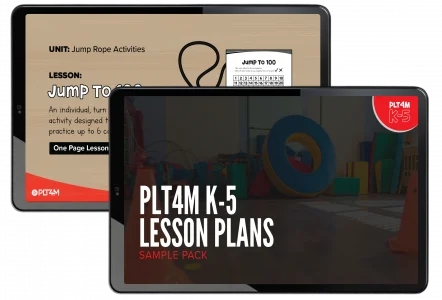
Explore our K-5 Curriculum with these select Lesson Plans from some of our most popular Units. Each lesson includes a one page lesson overview, equipment checklist, game setup, teaching cues, standard alignment and more!
Defining Fitness Games for Elementary PE
There are countless ways physical education teachers promote fitness in elementary PE. Activities like jump rope, tag games, locomotor movements, and other elementary PE games all get students moving and thinking.
But for the purpose of this article, we are using the term fitness in a slightly different way. Here, fitness refers more to the traditional elements and basic exercises students will see throughout life.
These include movements often found in warm ups, workouts, and basic training programs. Examples include stretching, raising the heart rate, basic strength movements, and mobility exercises.
Through fitness games for elementary PE, students might practice squats, lunges, jumping movements, or simple core exercises. In elementary PE, these movements should not feel like a traditional workout. Instead, they are often woven into games and playful challenges.
For example, students might complete bodyweight exercise movements as part of a tag game. Other activities may include movement challenges inside games like Go Fish, relay races, or station activities.
By embedding fitness movements inside games, students stay active while practicing important movement patterns. This approach allows teachers to introduce foundational personal fitness skills in a way that feels fun and engaging.
Fitness Games and Standards Alignment
Fitness games also support important learning goals within physical education standards. In elementary PE, students are not just moving. They are also learning about fitness and how physical activity connects to healthy habits.
The SHAPE America National Standards highlight the importance of helping students recognize and understand activities that improve fitness.
In the early grades, elementary students begin identifying different ways movement contributes to fitness.
Standard 2.2.6 (PreK–2) states that students should identify physical activities that contribute to fitness. Fitness games provide simple and engaging ways to introduce these ideas.
For example, students might play a tag game that includes different exercises like jumping, squatting, or running. Teachers can pause the game and ask students to identify how those movements help their bodies.
As students progress into upper elementary grade levels, the expectations expand. Students begin connecting specific activities to different components of fitness.
Standard 2.5.7 (Grades 3–5) asks students to define and provide examples of movement activities that develop health-related fitness components.
Fitness games create natural opportunities to explore these ideas. Running games may build cardiovascular fitness. Bodyweight challenges can develop muscular strength and endurance.
Teachers can use short reflections for small groups or full-class discussions to reinforce these connections and skills.
By embedding fitness concepts inside pe lessons and games, teachers can meet standards while keeping lessons active and engaging for students.
5 Fun Fitness Games for Elementary PE
In PLT4M’s library of over 150 elementary PE lesson plans, there are several fitness games for elementary PE that blend traditional fitness movements with engaging activities students enjoy.
Below are five fun fitness games that help students stay active while practicing foundational fitness skills:
- Go Fish Fitness – A small-group relay-style game that gets students taking turns to find matching “Go Fish” cards with a fun fitness twist.
- Fitness Color Maps – A cooperative partner activity that gets students engaged in different fitness movements as they travel to different colored spots.
- Work OUT Fitness Tag – A tag game that gets students working out. When students are tagged, they must complete a short “workout” before they can rejoin the active game.
- Catch It, Keep It Fitness – A partner activity designed to practice throwing and catching from a variety of distances with a fun fitness twist.
- Plank Tag – A tag game that can be used as a warm up or instant activity to get students moving right away while supporting body weight in a high plank position.
Learn more about our full slate of elementary PE lesson plans made in partnership with our K-5 expert Mike Graham.
Get Free Sample Lessons!
Explore our K-5 Curriculum with these select Lesson Plans from some of our most popular Units. Each lesson includes a one page lesson overview, equipment checklist, game setup, teaching cues, standard alignment and more!
Spotlight Activity: Go Fish Fitness
One example of a fun fitness game for elementary PE is Go Fish Fitness. This small-group relay game blends a familiar card game with simple fitness movements.
Students travel across the gym to collect cards while working with their team. The goal is to find matching cards while completing short fitness challenges along the way.
Before the activity begins, students review the fitness movements used during the game. In PLT4M lessons, these movements are introduced with short, age-appropriate videos and GIFs.
These visuals demonstrate the movement cues and expectations before the activity starts. Students can clearly see how to perform exercises like squats, jumps, or other bodyweight movements.
Displaying the movements ahead of time helps students feel confident and prepared. It also allows teachers to quickly reinforce safe and effective movement patterns.

Game Play GIF In Action
Once the activity begins, students work in teams to collect matching cards. Each team starts with one card placed inside a hula hoop.
Students run to the opposite side of the gym to select a card and check for a match.
Throughout the round, a Match / No Match visual slide remains displayed on the screen. This serves as a clear reference for the entire class.
If students find a matching card, they complete the “match” fitness movement. If the card does not match, they complete the “no match” movement before the next teammate goes.
This visual cue helps keep the activity flowing without constant reminders from the teacher. Students quickly learn what movement to perform based on the card they select.
By combining a relay game with simple fitness movements, Go Fish Fitness keeps the entire class active. It also reinforces basic fitness skills through a game students already understand.

Key Takeaways on Fitness Games
Fitness can and should be fun for students in elementary PE. When movement is paired with engaging games, students stay active while building important fitness skills.
Instead of traditional workouts, teachers can introduce fitness through familiar activities and playful challenges. Tag games, relay races, and partner activities can all include simple fitness movements.
These activities help students practice foundational skills like squatting, jumping, balancing, and supporting their body weight. When teachers provide clear demonstrations and visual cues, students also learn how to perform these movements with good form and technique.
Fitness games also help keep the entire class involved and moving. With the right structure, students spend less time waiting and more time practicing healthy movement.
Most importantly, these activities create positive experiences with physical activity. When students associate movement with fun, they are more likely to stay active throughout their lives.
By blending classic elementary PE games with simple fitness challenges, teachers can build strong foundations for lifelong health and fitness.



 ;
;